Corporate properties in Riverdale face a simple reality: landscapes shape first impressions long before reception does. From the moment a client turns off Highway 85 or GA-138 into a business park, the plant health, bed edges, and cleanliness of hardscape send a message about how the company operates. That impression is not luck. It is the result of structured office landscape maintenance programs supported by clear expectations, skilled crews, and detailed reporting that keeps property managers informed without eating their day.
I have managed and audited maintenance programs across South Metro Atlanta. The difference between an average site and a consistently sharp one often comes down to two things: a cadence of care that matches the site’s microclimate, and reporting with enough detail to catch small problems before they escalate. Riverdale’s soils, heat, and traffic patterns add another layer of nuance. What works in Midtown Atlanta or Alpharetta often needs recalibration here. The best partners know this and build programs for corporate campus landscaping and office complex landscaping that reflect local realities.
What “program” really means in Riverdale
A program is not just a schedule. It is a set of standards, a defined scope for corporate grounds maintenance, and a playbook for exceptions. A Riverdale corporate office landscaping plan typically integrates weekly mowing cycles during the growing season, biweekly or monthly during dormancy, along with shrub pruning, bed cultivation, selective hand weeding, and mulch refreshes at disciplined intervals. The schedule flexes around Bermudagrass flush in June, fall leaf drop from oaks and sweetgums, and spring pollen that coats every hard surface in a yellow film.
For business park landscaping, a solid program blends landscape bed care with turf management, tree monitoring, irrigation checks, and litter patrol. The scope for office grounds maintenance should spell out the details: blade height for Bermudagrass and Zoysia, pruning windows for hollies and loropetalum, acceptable weed threshold per 500 square feet of bed space, and turnaround times for site issues flagged by the crew. This is standard language in strong corporate maintenance contracts, and it keeps the results predictable even when crew members change.
Riverdale’s older office parks often carry heavy foot traffic to transit stops and small shops. That translates to more curb appeal pressure points: entry signs, parking islands, and the walk from visitor parking to the lobby. For professional office landscaping on a corporate property landscaping plan, those spaces need extra bed definition and weekly touch-ups. This is where detailed reporting shines, because it documents that those high-visibility zones received the intended priority.
The role of detailed reporting: more than photos and checkboxes
I have seen reports that were technically complete but practically useless. They showed five photos of freshly mowed turf and a generic line that everything was in good shape. That tells a property manager nothing about irrigation head performance on Zone 7, the knock out roses with thrips on the east elevation, or the compacted soil where delivery trucks shortcut across turf to access the dock.
Useful reporting for office landscape maintenance programs balances three elements:
- Quantified observations. Instead of “beds weeded,” a good report notes “Hand-weeded 4 primary entry beds, total weed pressure 10 to 15 per bed, all removed.” If poa annua is popping through winter rye along a curb, the report notes the percentage of coverage and whether selective control is scheduled. Action and accountability. Every note about an issue should name a remedy and a time frame. “Irrigation leak at Zone 3, head 14 near building B entrance, approx. 1 gallon per minute” paired with “temporary cap installed today, proposal for fix by Friday.” This reduces back-and-forth and keeps managed campus landscaping efficient. Visual proof that zooms in on exceptions. Photos matter when they show the problem and the fix, not just panoramas of mowed turf.
When these appear consistently, property managers gain leverage. They can forecast spend, prioritize areas for enhancement, and catch scope gaps early. With recurring office landscaping services, consistent reporting also creates a site history that helps diagnose seasonal issues the next year.
Riverdale climate and soils: small differences that change the playbook
On paper, Riverdale shares Atlanta’s climate. In practice, properties closer to the airport encounter more heat islands, more wind from open corridors, and more dust settling on foliage. The red clay on many sites, especially those built in the 80s and 90s, compacts easily. Without routine aeration and organic matter inputs, turf roots ride shallow and suffer in late July. Programs for corporate lawn maintenance that thrive in north metro can fall short here if they skip soil structure improvements.
I recommend core aeration twice per growing season for high-visibility turf near entries, once for secondary areas. Pair it with topdressing on select slopes and near sidewalks where compaction is worst. For office park maintenance services, that seemingly small line item reduces irrigation demand, improves Go to the website resilience during heat spikes, and even reduces dust on adjacent glass because healthier turf holds its canopy.
Irrigation programming also needs closer attention here. Subsurface pressure fluctuations can be common near larger corporate office landscaping sites sharing municipal lines with neighboring facilities. Smart controllers help, but a human still needs to verify distribution uniformity. A quarterly water audit, even if quick and informal, can save thousands by catching a misaligned rotor soaking a sidewalk while nearby plants wilt.
Building a maintenance cadence that fits office use
Corporate properties in Riverdale often experience staggered traffic: Monday arrivals, midweek peak, Friday departures. Maintenance should fit the rhythm of the site. Crews that mow on Mondays risk leaving tire marks and clippings as the week begins. Wednesday or Thursday visits tend to keep the site crisp for the higher volume of client meetings and walkthroughs. For commercial office landscaping that shares parking with retail, early morning service reduces conflicts.
For campus landscape maintenance across multiple buildings, try alternating zones. Focus week A on building A entries, islands, and walks, while holding a light touch elsewhere. Week B shifts the emphasis to building B. The entire campus receives service weekly, yet reporting highlights which areas received detail work. Over a month, high-visibility spaces stay consistent without ballooning total hours.
Scheduled office maintenance should also align with corporate security protocols. Badge-access gates and loading docks are notorious for causing landscape delays. Slot irrigation checks during windows when facilities teams can escort. Document these time blocks in the program so crews do not arrive and bounce. Skeptics view this as logistics, not landscaping, but the sites that run smoothly over years treat access planning as part of the horticulture strategy.
What to include in a Riverdale-ready program scope
Every property differs, but most office landscape maintenance programs in Riverdale benefit from a common backbone. The program below is an example template I’ve seen work across office complex landscaping and business campus lawn care on sites from 2 to 20 acres. Adjust the details to your planting palette and irrigation system.
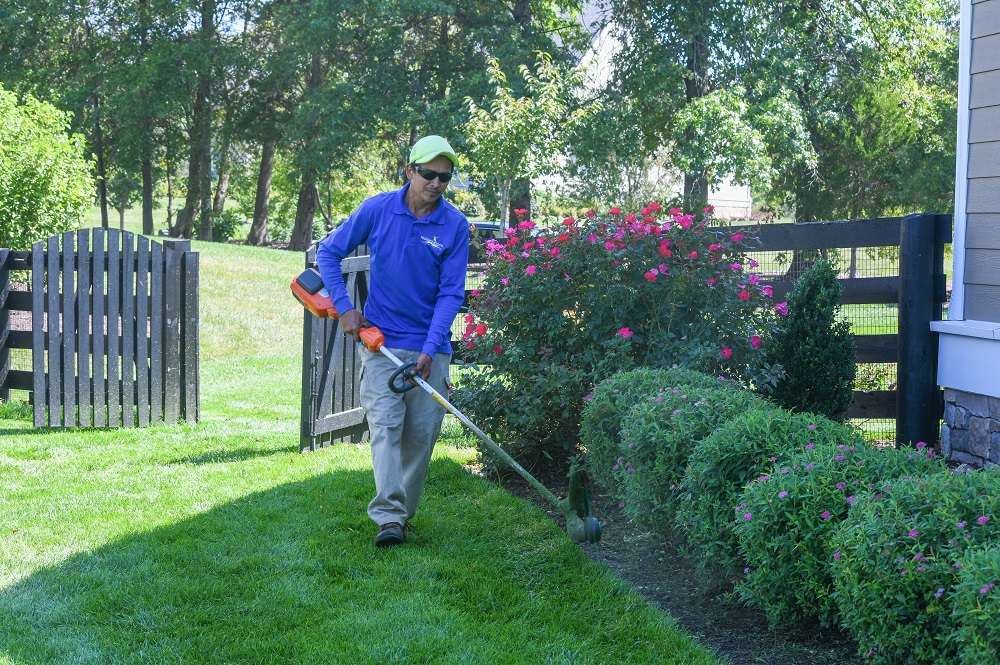
- Turf management: weekly mowing April through October, biweekly or as-needed November through March. Maintain Bermudagrass at 1.25 to 1.75 inches, Zoysia at 1.5 to 2 inches. String trim edges cleanly, no scalping along curbs. Two core aerations per growing season for primary areas, one for secondary. Pre-emergent applications split spring and fall, with spot post-emergent on curb lines and cracks. Bed care: weekly cultivation during the growing season, every other week in winter. Hand-weed primaries, selective herbicide for secondaries. Add 2 to 3 inches of hardwood mulch or pine straw twice annually, with touch-ups at signage and entries. Shrubs and ornamentals: pruning by plant type, not by calendar alone. Shear hedges during active growth, but let flowering shrubs set buds first. Maintain clear sight lines at intersections and signage, with measured heights documented in the scope. Trees: quarterly inspection by a qualified arborist for campus and corporate property landscaping over 10 acres, semiannual for smaller sites. Root flare checks on newly planted trees at 30, 90, and 180 days to avoid girdling mulch. Irrigation: monthly wet checks in season, pre-season start-up, mid-season audit, and winterization. Document zones with known pressure issues and nozzle types, and keep spare rotors and nozzles on site in a labeled kit.
The last point might be the least glamorous, but it saves headaches. A labeled kit and a simple parts log make after-hours fixes possible when water pours into a parking lot at 7:30 a.m. before a board meeting.
Reporting that property managers will actually read
When I say detailed reporting, I do not mean a novel. A crisp report for corporate landscape maintenance fits on one to two pages with linked photos. A reliable format looks like this:
- Summary line: “Week 28, 3 crew members, 6.2 labor hours, all routine tasks completed, two issues flagged.” Issue log: each item with location, observed condition, immediate action, recommended fix, and due date. Enhancements and savings: quick notes on opportunities, such as converting a water-hungry strip to a native groundcover, or switching to high-efficiency nozzles on two zones that repeatedly overspray. Weather and site impact: rainfall totals or drought alerts relevant to irrigation. Dust accumulation on south elevation noted after nearby construction began.
The report should be tagged to a site map. For office landscaping services on campuses with multiple buildings, a simple alphanumeric grid overlaid on a campus plan keeps everyone oriented. If the report references Bed B-17, the site map shows where that is. You can accomplish this with a PDF and an index without expensive software. Over time, these tags help crews and managers speak the same language, and turnover becomes less disruptive.
What changes from spring to winter, and how reporting keeps pace
Riverdale’s spring rises fast. March flips a switch for pre-emergents and first mow-down of winter weeds. The April pollen wave will coat beds and make hardscape messy. Program timelines should include a two-week stretch of extra blow-downs and a focus on entry power washing if the budget allows. Reporting should note when pollen season is impacting service times, because it explains the modest shift from bed cultivation to cleanup.
Summer brings afternoon storms, heat stress, and weed pressure in bed edges. Reports that log weed hotspots allow targeted soil solarization or fabric replacement during slower weeks. Watching irrigation run times matters here. Overwatering shows up as algae on walkways and mushrooms in mulch. Underwatering appears as hot spots near asphalt. For managed campus landscaping, a heat map of recurring hot spots built from weekly notes can justify capital improvements to irrigation.
Fall tasks revolve around leaf management and selective pruning. Riverdale’s mix of willow oaks and maples means heavy leaf drop over a six to eight week band. Programs should layer additional visits or bagging during peak weeks. Detailed reporting helps washers and window cleaners coordinate with landscape to reduce rework. It should also track tree health. If a red maple shows early color in September three years in a row, note it. The pattern points to root stress or girdling roots, not a pretty fall effect.
Winter is not idle. It is the best time for structural pruning, bed redesigns, and refurbishing signage plantings. Corporate office landscaping benefits from a winter walk with the property manager to mark tired areas for renovation. Reports in winter should capture these walkthroughs, proposals, and approvals so crews mobilize before spring rush. A winter photo set, with beds labeled and goals noted, becomes the reference point that keeps enhancements on track.
Case examples from South Metro properties
A two-building office complex near Upper Riverdale Road struggled with turf thinness along the main drive. Reports over two months kept flagging hot spots, even after run times were increased. The breakthrough came from quantifying pressure and distribution uniformity during a simple audit. Two rotors were delivering 40 percent less volume due to a clogged filter and a partially closed isolation valve. The report documented the fix, reduced the run times back to standard, and thin turf recovered within three weeks without extra fertilizer.
Another site, a business park landscaping project off GA-85, had persistent weed pressure in parking islands despite regular pre-emergent treatments. Detailed reports logged weed counts and bed locations. A pattern emerged around islands with deteriorating landscape fabric. Instead of throwing more chemicals at the problem, the team removed fabric, improved soil with compost, and switched to a dense evergreen groundcover. The next season, weed counts fell by more than half, and the scheduled office maintenance hours dropped on those islands, freeing time for detail work at the main monument sign.
At a larger campus landscape maintenance account, the operations team used weekly reports to track litter loads that spiked every Friday near one building. The data led to a conversation with a tenant about outdoor lunches and overflow trash. Adding a covered bin and moving two picnic tables solved a persistent Saturday morning mess. It is a small fix you miss if reports only say “policed grounds.”
Budget alignment and transparency
Not every site can afford high-frequency service across the board. Detailed reporting lets you adjust without losing quality. If a property manager needs to cut the program by 10 percent, the reports show where that reduction hurts least. Perhaps secondary turf can move from weekly to 10-day cycles during shoulder seasons, while entries hold weekly service. Or mulch becomes annual with a mid-year touch-up at signage only.
For corporate maintenance contracts, tie line items to measurable outputs: mulch depth at 2 to 3 inches on primaries, 1.5 to 2 inches on secondaries, with spot checks recorded. If a storm forces an extra visit, the report flags it separately, and the invoice references that field note. Finance teams appreciate the clarity, and trust builds when invoices map to documented events rather than vague overtime.
Safety, liability, and the details that keep you out of trouble
Landscaping touches public spaces, so small oversights can become incidents. Slippery algae on shaded concrete after irrigation, low limbs over walkways, divots in turf near athletic areas, or mulch piled against fire risers, these are common pitfalls. Detailed reporting reduces risk by logging specific corrections and near misses.
Crews should also note non-landscape issues that affect appearances and safety: failed site lighting near the main entry or settlement along a curb. While not in scope, these notations help the property team act before a client notices. Reporting templates that allocate a few lines for “out-of-scope observations” become unexpectedly valuable for professional office landscaping partnerships built on trust.
Communication rhythm that maintains momentum
Email reports work for many managers, but the best outcomes come from a monthly 15-minute call. Use the call to confirm priorities, review open items, and align on enhancements. For corporate campus landscaping with multiple stakeholders, a short standing meeting prevents surprises. Property managers do not need to walk every inch of the site, yet they should know which beds struggled, which irrigation zones needed attention, and what is queued next.
For recurring office landscaping services, I encourage an annual strategy session in January. Review last year’s reports, note recurring headaches, and set three clear goals: reduce water use by a set percentage, refresh a dated entry bed, and improve turf density in one high-traffic area. Tie the goals to actions in the program, and let the weekly reports measure progress. Simple, visible wins keep budgets intact when competing internal priorities arise.
Sustainability without buzzwords
Sustainability earns its keep when it lowers operating costs and improves plant health. In Riverdale, water is the lever. Switch to high-efficiency rotary nozzles where spray heads mist in afternoon heat, add mulch rings under trees to reduce competition, and build soil with compost in targeted beds. Reports that track water use by zone and note changes in run times support the business case.
Right plant, right place remains the cornerstone. Sun-loving dwarf yaupon hollies struggle under dense oak canopies. Swap them for cast iron plant or aucuba in the shadiest pockets. If a south-facing bed bakes against a brick wall, drift roses and rosemary perform under stress where nandina might not. Landscaping crews often know these truths from experience. The reporting process is your way to capture that knowledge and turn it into site standards for corporate office landscaping that last beyond a single manager’s tenure.
How to evaluate a provider’s program and reporting before you sign
Choosing a partner for office park maintenance services in Riverdale should not hinge on price alone. Ask for sample reports from an active account with personally identifiable information removed. Read them. Are the notes specific? Do they log measurements, not just adjectives? Do they include tagged photos that correspond to a site map? Request references from similar corporate property landscaping sites in the south metro. A walk-through with the operations manager, not just the sales rep, reveals whether the field team understands soil, water, and plant material or just schedules.
You can also ask for a short pilot period. Three to six weeks of service with full reporting gives enough data to gauge fit. Watch how they respond to a minor issue, such as a sprinkler breaking on a Friday afternoon. The fix and the report will tell you more than a glossy proposal.
Final thoughts from the field
Maintaining a corporate campus or an office complex in Riverdale is not glamorous, yet it is visible every day. A well-built program does not protect against every surprise, but it limits the unknowns and keeps stakeholders aligned. Detailed reporting turns landscaping from a background service into a managed asset, one you can measure, forecast, and improve over time.
The sites that look sharp, month after month, share common traits. Their programs match the place, not a generic template. Their crews know why they do what they do, not just when. Their reports give managers insight in minutes, not a pile of tasks to decipher. With that foundation, corporate landscape maintenance becomes simpler to manage, more cost effective, and more reliable for the people who visit, work, and make decisions on the property.
Whether you oversee a single building off Upper Riverdale or a multi-tenant business campus along GA-85, the framework is the same. Get the cadence right. Insist on clarity in scope and communication. Use detailed reporting to capture what the site is telling you. The landscape will do the rest.